
Karidat cares for community for 45 years
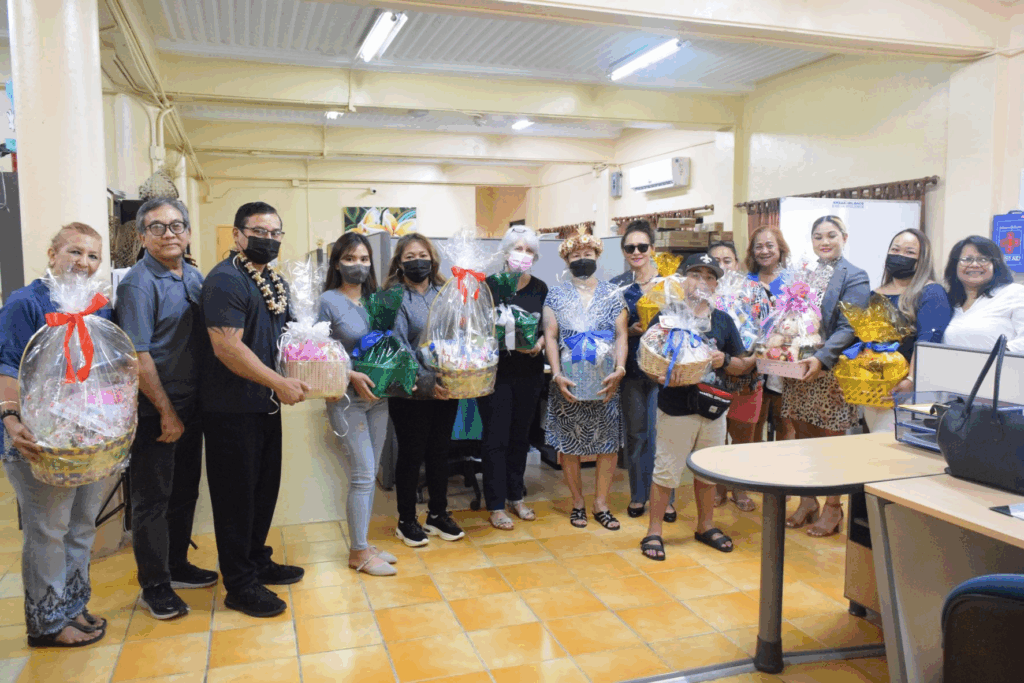
EARLIER this week on May 5, Karidat, the Saipan-based Catholic nonprofit organization, celebrated 45 years of “service, advocacy, and convening” in the CNMI.
Karidat’s mission is to share in the social ministry of the Catholic Church through “Christian witness of this ministry at the institutional level.”
In Chamorro, Karidat means “charity” or “alms.”
To that end, Karidat has created community programs addressing family problems and interpersonal conflict; cared for victims of sexual trafficking and domestic violence; and otherwise tended to a whole host of social and community issues, including disaster relief.
Notably, the activities Karidat do include operating the island’s food pantry, offering rental assistance as funds provide; running the Victim Advocacy Program to support victims of crime through crisis counseling, case management, and more; caring for the medical and legal needs of sexual trafficking victims; operating Guma’ Esperansa and GETHOPE Transitional Housing Program and more.
Mustard seed
Like the mustard seed in the Gospel parable, Karidat’s influence began humbly but took root, grew and spread far and wide.
Karidat began its mission as an idea created by then-Msgr. Tomas Camacho, who later became the bishop of the Diocese of Chalan Kanoa.
According to Karidat Executive Director Lauri Ogumoro, Msgr. Camacho gathered together in April 1980 nine like-minded Catholics—Carlos Shoda, Larry LG. Cabrera+, Jesse C. Borja, Agnes McPhetres, Angie V. De Leon Guerrero, Gus M. Celis Jr., Jesus G. Villagomez+, Luis M. Limes+, and Juan R. Sablan+—to present his vision for an organization that could help residents cope with challenges “confronting their total well-being.”
By May 5 of that year, the group was formally incorporated as the “Northern Marianas Catholic Social Services” or NMCSS—Karidat’s forerunner.
Time of growth
The early ’80s served as a time of growth, with an emphasis on social programs.
In June 1980, the Board of Directors elected its first officers: Shoda was elected President, Borja became Vice President, and Villagomez+ was its Secretary and Treasurer. Msgr. Camacho served as the first Executive Director.
By February 1981, NMCSS implemented the Family Services Program to promote “strong and healthy families.” To achieve this, the program provided family and marriage counseling, emergency clothing, food and shelter assistance. advocacy, information and referral, and case management.
That same year, Karidat created the Teen Center, which offered a supervised program for youths from Chalan Kanoa and Susupe, and Marianas Bound, a program to foster self-awareness and personal growth using outdoors education.
By the mid-’80s, NMCSS began to expand in order to serve the disabled community.
In 1984 they collaborated with what was then known as the Department of Education to implement the Protection & Advocacy Program, a program mandated by the Developmental Disabilities Assistance and Bill of Rights Act of 1975.
In 1985, NMCSS provided emergency food and shelter assistance to individuals and families experiencing financial difficulties, using grant funds from the United Way Emergency Food and Shelter program.
By the late ’80s, NMCSS created two new programs—one for advocacy for the disabled and one to protect victims of sexual abuse.
In September 1986, they created the Protection and Advocacy for the Mentally Ill program to inform individuals of their rights, helping them learn to exercise their rights to get what they need, and protect themselves from abuse and neglect. The Protection and Advocacy for the Mentally Ill program would go on to become the Northern Marianas Protection and Advocacy Systems Inc. or NMPASI, in 1993.
In August 1988, Karidat implemented the Ayuda Network to coordinate the efforts of government agencies, plan trainings, and avoid duplication of services related to victims of sexual and domestic abuse. The Ayuda Network would go on to also become an independent entity by 1992.
Becoming ‘Karidat’
In 1991, under the guidance of Executive Director Richard Shewman, NMCSS would change its name to Karidat in order to better denote its “true mission” and non-discriminatory stance, according to Ogumoro.
Also in the ’90s, Karidat extended protection to foreign laborers through the Guest Worker Assistance Program in 1995. They provided emergency food assistance and one month’s rental assistance to guest workers who had labor complaints against employers.
The CNMI’s Guma’ Esperansa, which serves as a shelter for battered women and their children, was also created by Karidat in 2001. Guma’ Esperansa assists victims of domestic violence, sexual assaults, and human trafficking.
Disaster aid
Over the past decade and a half Karidat continued to serve its community during two super typhoons.
When Saipan was hit by Soudelor and Yutu, Karidat used charitable funds to help the community, distributing food, water, and hygiene products at each parish on Saipan.
For Yutu, Karidat worked with the mass distribution committee at the joint Command Center to assist with the disaster response.
This year, even Karidat was not spared the effects of federal funding cuts, as the Emergency Food and Shelter Program was put on hold due to an executive order signed by President Donald Trump.
Community service
In the next few decades, Karidat will continue to find ways to serve the community, Ogumoro said.
“We give thanks to the Almighty God who has looked kindly and has showered His blessings on the humble agency that serves His people through the many services that Karidat has to offer,” she said. “We hope and believe that the inherent dignity and worth of human beings will be upheld in accordance with the moral and social teachings of the Catholic Church.”